Day of the Locust – A Film

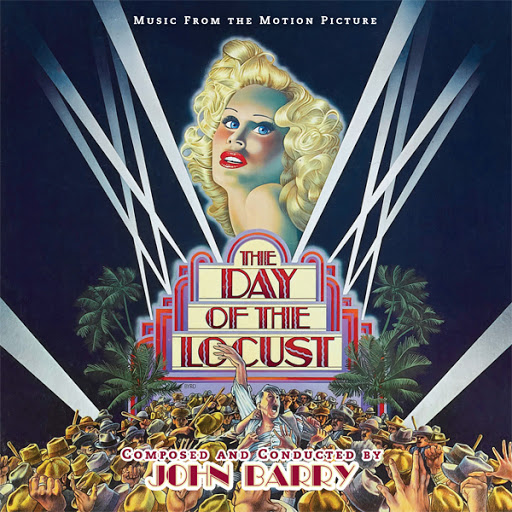
When I began to write this blog post, I wanted to take it in the direction of art because I really liked the assignment we did on online school where we connected art to the book. So, I looked up Day of the Locust and the first thing I saw was this film cover, which really intrigued me. I think this cover gives somewhat an overview of what happens in the novel and what’s to come, and I especially liked how the cover depicts Homer. His mouth is open in a scream, and at the ending the audience discovers that in reality “his jaw [was] hanging as though he wanted to scream but couldn’t” (181). This was one the quotes that really stuck with me throughout the novel and was quite unsettling to me, and I think this unsettling feel is carried through the cover. Faye is depicted as a much bigger piece of the cover, but somehow Homer is the thing that caught my eye, which I think was intentional by the artist. Overall, the film cover is very interesting, and it makes me wonder how the movie compares to the book, and in what ways they might differ.

Huck Finn

A lot happens in the first 41 pages (six chapters) of The Adventures of Huckleberry Finn. Huckleberry who I will refer to as Huck is a young boy living with his widowed aunt in the riverside town of St. Petersburg, Missouri. His mother had died and his father is a drunk who beats on Huck at any given opportunity which to the reader is very depressing but Huck has grown used to it. Huck is close friends with Tom Sawyer who the author of this book, Mark Twain, wrote about in a previous novel. Huck ran into a fortune with Tom in the previous story and he is left with $6,000 worth of gold which would be about $200,000 in today’s money. He has entrusted this money with a local friend and judge.

This book is already diving into themes such as racism, unfair governments and a desire for adventure which I think is going to develop into a really strong novel. I picked this book because I had it and I had never read it before but I know it is a classic so I am excited to see where this goes!

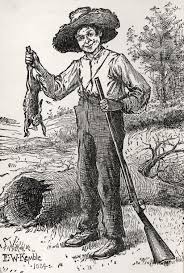
An illustration of Huckleberry Finn.

Response to Los Angeles Times Article on “The Day of the Locust”

https://www.latimes.com/entertainment/arts/la-caw-paperback-writers16-2009aug16-story.html

Los Angeles Times writer Richard Rayner reviewed Nathaneal West’s novel “The Day of the Locust”. Richard Rayner worships West’s depiction of 1939 America in “The Day of the Locust” stating “West crystallized it” (Rayner). Besides his admiration towards the novel, Rayner makes many arguments throughout the article some with which I agree, and some which I disagree.

The first point Rayner argues is that “West’s book is … reflecting the anger, disappointment and violence that bubble and simmer beneath the city’s welcoming and glassy surface” (Rayner). Rayner could not more accurately depict “The Day of the Locust”. The reader is first introduced to this idea in the very beginning pages of the novel as West describes the people of Los Angeles: “The fat lady in the yachting cap was going shopping, not boating; the man in the Norfolk jacket and Tyrolean hat was returning, not from a mountain, but an insurance office” (West 60). These people that make up the city represent the disappointment under their glamorous appearances. Their lives seem exciting and grand but they are really just partaking in normal day to day activities. The city they reside in takes upon these same characteristics. Not only does West show this idea through metaphors, but also through the lives of his characters. Tod Hackett, a main character of the novel, lives a life that seems fabulous on the surface but when looked at more closely is angry, disappointing and violent. If a person were to look at Tod on paper, they would be greatly impressed: “A talent scout for National Films had brought Tod to the coast” (West 60). As the novel continues, Tod’s true personality shows through. He lacks respect toward women and has violent intentions toward them. In two instances, Tod wished to attack Faye: “Nothing less violent than rape would do” (West 107) and “He reached for her ankle to pull her down, but missed… If he caught her now, she wouldn’t escape” (West 117). Much like the characters introduced in the beginning of the novel, Tod’s lifestyle represents the city as a whole. Finally, West reveals the true image of Los Angeles explicitly as he describes it through Tod’s painting “The Burning of Los Angeles”. The painting depicts a city on fire containing a chaotic mob. This painting symbolically portrays West’s view of the city.

The next point Rayner argues is in regards to Faye and immoral actions that “West in no way condemns her” (Rayner). While Faye gets away with her actions in “The Day of the Locust”, I disagree that West does not condemn her. Throughout the novel, West is quick to point out Faye’s ignorance and cruelty. In the beginning of “The Day of the Locust”, Faye’s father is very sick. West describes the scene in which Faye discovered his passing almost comically in that Faye was so focused on herself she did not notice her father was already dead: “She realized he must be pretty sick. She didn’t turn around because she noticed what looked like the beginning of a pimple” (West 122). In another scene of the novel, Faye shares with her guests her dreams of becoming an actress. As she describes her dreams, West mockingly describes her: “It was as though her body recognized how foolish her words were” (West 159). While Rayner states that West does not condemn Faye, West intentionally included moments like these in the story, making fun of Faye without explicitly condemning her. 

Another argument Rayner makes is that “Homer has come to Los Angeles, not to succeed, but to warm his skin and get ready to die” (Rayner). At the beginning of the novel, West introduces the idea of people coming to California to die: “Tod knew very little about them except they had come to California to die” (West 60). While alluding to these “characters” many times throughout the story, Rayner makes a valid point that one of the main characters, Homer, embodies this idea. It is very evident throughout the novel that Homer has given up, but the last scene of the novel represents the idea the best: “Brakes screeched and twice he was almost run over, but he didn’t swerve or hurry” (West 179). Even though it can be argued that this destructive nature Homer has is a product of Faye leaving him, the entire novel works up to this point. Homer moves to California for no purpose other than his doctor suggested it, never tries to better his own life, and lives emptily with no structure to his day. This aimless lifestyle he lives leads up toward the end of the novel where he inevitably causes self-destruction. 

As a whole, Rayner’s article deeply understands the purpose of Nathaneal West’s novel “The Day of the Locust”. He captures the two main ideas of West’s novel: the true view of Los Angeles and the self-destructive quality of the people. While I disagree with his opinion on the West’s perspective on Faye, overall, I agree with his ideas.

Day of the Locust vs. Hotel California

The Day of the Locust by Nathaneal West greatly reminds me of the hit song Hotel California by the Eagles. Firstly, there are many surface level connections. For example, both the Day of the Locust and Hotel California take place in California. The mysterious girl in the song Hotel California also reminds me a lot of Faye from the Day of the Locust. There is a line in Hotel California that goes “She got plenty of pretty, pretty boys, that she calls friends”. This reminds me of Faye because she is “friends” with Tod, Homer, Earle and the Mexican whom she all calls friends but they want more than friendship. On a deeper level, both the song and novel bring forth the idea of hopelessness and being trapped. In the novel, it is stated that “Tod knew very little about them except that they had come to California to die (60). Similarly, in Hotel California there is a line that states “You can check out any time you like, but you can never leave!”. Both of these lines have an eerie tone and display of people having no control of the world around them. 

Listen Here to Hotel California by the Eagles:

Short Blog #3

“It was the classic mistake, Tod realized, the same one Napoleon had made.” The quote from Chapter 18. As an artist’s perspective, Tod thinks that reality and appearance may line up. Tod realized that he made the same type of mistake as Napoleon did.

He perceived the tension in the theater, the competition between illusion and reality. When Hackett was frustrated by time and space, he made urgent contact with Faye Greene. Hackett’s anxiety and need are reflected by the sets he passes through and the difficulties for each series of conjures. Tod’s feelings for Faye may be a similar reflection between tension, illusion, and reality or how fact and fiction intersect. Tod’s genuine physical attraction while he thinks Greene is totally manufactured narrative. His action is more unlikely to be adolescent love, in my opinion, just a mixture of illusion, delusion, and physical reality. In fact, this isn’t perfectly real.

West’s potential use of these images for bizarre and satirical paintings reveals Tod’s combined fascination, repulsion, and the decaying civilization which Hollywood represents. The author addresses the real world and Hollywood’s fantasy merge indistinguishably. Napoleon’s historically unsuccessful charge and the Hollywood’s incomplete charge symbolized humanity’s blundering towards disaster, his narration foreshadows the end of the novel. In West’s point of view, the world is approaching to two extremes.

Is The Grapes of Wrath a “Great American Novel”?

The Pulitzer-Prize-winning novel, The Grapes of Wrath written by John Steinbeck, tells the story of the Joad family who migrated from Oklahoma to California in the midst of the Dust Bowl and the Great Depression. Based on our class criteria, this novel exceeds the expectations that come with being a “Great American Novel.”

American Content Set in the 1930s, The Grapes of Wrath, reveals the harsh reality of migrants who suffered from the Dust Bowl and the Great Depression. This novel portrays a significant part of American history that affected people all around the country. Like the Joads, many Americans faced migration, starvation, unemployment, death, and other issues that came with this time period.

Limitations In addition to meeting the requirement for having American content, a “Great American Novel” must have an American author. John Ernst Steinbeck was born in Salinas, CA in 1902. Many of his works include stories of the Great Depression Era. Steinbeck had a very successful career with total of 31 books Witten—The Grapes of Wrath being one of the most popular ones. He also won a Nobel Prize in Literature in 1962.

Style Throughout the novel, Steinbeck’s unique style is evident. He alternates between the chapters, using long, narrative dialogue and short, poetic description. The long chapters tell the story of the Joads and their journey to California. The shorter chapters speak of a greater message of the social and economic issues that impacted the entire country. Steinbeck also uses a lot of repetition to help get his point across. For example, in chapter 7 the car salesmen repeats the words “used cars. good used cars” (89) over and over to appeal to the customers.

Relevancy to Today Another important aspect of a “Great American Novel” is that it pertains to today’s world. The immigrants crossing borders today face many of the same struggles as the “Okies” who fled the dust bowl in the 1930s; both of these groups have the same goal: finding a better life for their family. Steinbeck says, “they were hungry, and they were fierce. And they had hoped to find a home, and they found only hatred ” (318). I feel that this quote relates to both the Okies and immigrants today.

Characterization Many of the characters in the novel, especially Tom and Rose of Sharon, undergo significant personal growth and development. Former preacher, Jim Casey’s principals and morals influence Tom and force him to rethink the direction of his life. In the end, Tom sacrifices his safety to stand up for workers being mistreated (just like Casey did). In the end of the novel, Tom says, “God, I’m talkin’ like Casy. Comes of thinking’ about him so much. Seems like I can see him sometimes” (572). On the other hand, with Rose of Sharon, readers can see her transformation from being very needy and selfish to becoming a woman and helping feed the starving man. These well-rounded, developed characters prove that The Grapes of Wrath is a “Great American Novel”.

Content Steinbeck’s work in this novel delivers a strong message for all people. Readers learn a powerful message of human dignity. The Joads believe that every person deserves to have the basic humans rights, and they give as much as they can to help others. Ma teaches us a lesson about the importance of family. Along the journey, Ma is the glue that holds them together. When the car broke down on the side of the road, “the eyes of the whole family shifted back to Ma. She was the power” (231). Here, Ma insisted that the family stay together when Tom and Casy offer to stay behind and fix the car. She knows that without family, they would have nothing.

Based on this criteria, I believe that The Grapes of Wrath is truly a “Great American Novel”. Not only does the book have an American author and American content, but it contains unique stylistic elements, strong character development, and a message that speaks to the people of today.

Vogel Short Blog #2

“At this time Tom knew very little about them except that they had come to California to die” (60).

Stated on just the second page of the novel, West quickly establishes just how tough it was to make it in Hollywood during its Golden Age. This fact could be clearly witnessed not just in the novel, but in real life. In an attempt for stardom, many actresses were coaxed into situations that often destroyed their lives in the long term. One of the most infamous examples of this was Judy Garland. Probably best known for her role as Dorothy in The Wizard of Oz, Garland took prescribed barbiturate sleeping pills along with illicitly obtained pills containing morphine. These pills were common among actresses of the time period as they often were overworked and under enormous stress to pump out movie after movie. The barbiturate pills eventually led to Garland’s death as she overdosed at the age of forty-seven. To me, Garland serves as the prime example of the harsh reality behind the facade of 1930s Hollywood’s outward jubilee. From the beginning of the novel, West establishes a bleak atmosphere that not only carries throughout but also one that closely mirrored the reality of the time.

The Unforgettable Scenes (Long Blog #1)

The 1930s of the United States had numerous historic events: The New Deal, The Great Depression, and The Dust Bowl. None of these events would be erased from people’s minds. People’s life is altered, nothing left. “How can we live without our lives? How will we know it’s us without our past?” In Steinbeck’s mind, this was the worst decade of the twentieth century. Why the novel The Grapes of Wrath is considered the best book of American history? Here are some memorable scenes.

First of all, after the roaring 20s, people in the Great Plain enjoyed their life with abundant fruits, vegetables, and wheat. They did not realize that the biggest challenge was imminent, The Dust Bowl. In April 1935, the extreme drought stimulated the onset of the dust storms, the dust engulfed everything including people’s hope. People are forced to immigrate to the other states for survival as well as the Joads family. Pa Joads, the leader of the family, was moved out. “I’m scared of stuff so nice. I ain’t got faith. I’m scared somepin ain’t so nice about it.” In Chapter 10, Steinbeck depicted the scenario of people suffering under the starvation, they have no money to afford even an acre of farm to cultivate because they already perceived that the storms are violent enough to destroy everything here. Ma was suffered under double fear: the risk of losing Granpa, Granma, and Rose of Sharon’s baby and the future of her family. Staying here instead of evacuating will end up with nothing. Farming was the only source for people in the countryside to earn money, once people lose the sole way to survive, they would gradually become crazy. Their minds are completely severed.

Then, the environment was deteriorating in the last half of the 1930s, the anxiety and anger made people pursuing the money insanely. “They breathe profits; they eat the interest on money. If they don’t get it, they die the way you die without air, without side-meat.” under Steinbeck’s narration, the quote reveals the seriousness of the situation. They cannot make any profits, they desire work, constant work, with a stable wage. Nothing exists in their home state is dependable. “The bank is something more than men, I tell you. It’s the monster. Men made it, but they can’t control it.” At that time, in Steinbeck’s mind, the bank could not operate normally, which the farmers have faced the consequence of not get paid. Once the bank shut, farmers’ life ends. 

Furthermore, most of the farmers would never forget that their home is horrible as hell, therefore they decide to escape, but the reality harshly beat them up. The assumption of once moving to California, more opportunities will be available, are not true. In Chapter 16, the Joads found out the first experience of a man who has already immigrated to California but made a poor transaction––use more effort to pay for a worse life. His wife and children were endangered of dying due to the scarcity of food and wealth. This makes the others consider how tough it might be to feed their own families, once they arrive in California. He is a man who is dragged down by life and has decided to give up and may end up returning his home. “They were not farm men anymore, but migrant men.” this quote from Chapter 17 vividly described the impacts of capitalism and social discrimination. Under capitalism, people with the highest social status always have the priority for anything but the farmworkers, the bottom of the social status pyramid, have none of the privileges. Once the migrant workers arrived in California, they faced a new set of obstacles. They were labeled as “migrant workers”, which means their social status had been lowered. They never imagined that even finding regular work can be uphill. Instead, they found the local people hated them because they are afraid of the migrants would steal their jobs. The store owners also hated them, because they didn’t have any money to spend. The landowners, whose forefathers stole the land from its original owners, feared the migrants would try to do the same to them. They knew if people were hungry enough and determined enough they could achieve anything. All the owners, people who stand on the top of the social pyramid, would never realize that what the migrant works are asked for is the most basic level of the physical and mental needs. 

The owners dominated the government. Finally, in this period, the U.S. government also passed a series of labor laws to protect workers, but that excluded farmworkers and domestic laborers, the jobs that were historically held by African Americans and immigrants. These laws specifically exclude farmworkers from basic labor protections such as overtime pay, workers’ compensation, protection for unionizing and collective bargaining, workers’ compensation, and child labor laws. The natural disaster is unavoidable but the social inequality can be stopped. If we don’t have the farmers to cultivate the food for us, how we can survive? Why would we treat them differently? The worst thing is not the dust storms, is the blindness to adjust the mind of excluding people in the lower class. Martin Luther King Jr. can bravely fight for racial discrimination, but who else has that courage now? 

When I’m reading The Grapes of Wrath, my tears start to drain.

Works Cited

“Timeline of Agricultural Labor.” NFWM, nfwm.org/farm-workers/farm-worker-issues/timeline-of-agricultural-labor/.
A Great American Novel

The concept of “Great American Novels” never really crossed my mind until this year. I could figure out what one was, but the constraints of it were a mystery to me. It was fascinating to craft the criteria for a Great American Novel, and the “Grapes of Wrath” by John Steinbeck fits into every category, therefore claiming its title as a Great American Novel.

The first criteria of a Great American Novel is that it must have American content. There is no question that the “Grapes of Wrath” portrays this content because the entirety of the novel is based around the Dust Bowl, occurring from 1930 to 1936. The Joads are an American family affected by the Dust Bowl, therefore having to migrate from Oklahoma to California to escape it. Referred to as Okies throughout the novel, Steinbeck depicts what most American families had to suffer through during the time of the Dust Bowl, and how draining it was on all of them.

Next, in order to be a Great American Novel the novel must have multiple stylistic elements. One of the most important elements Steinbeck used was his tone. Steinbeck manages to maintain a depressing but still somewhat hopeful tone for the duration of the novel by adding slivers of hope throughout. He also uses personification as an important stylistic device to emphasize how much the land means to the farmers. For example, when he describes tractors as “snub-nosed monsters” (47) “bit[ing] into the house-corner” (52) the Okie’s hatred for what the tractors are doing is stressed. These two stylistic elements further the novel as a Great American one.

The third criteria is relevancy – if the novel is still relevant today and if readers can relate. “Grapes of Wrath” is undoubtedly relevant today with the issue of immigration, for immigrants can be required to go to overcrowded government camps just as the Joads did. The novel also includes people using derogatory language towards the Okies, and according to CNN, in 2014 as a busload of immigrants arrived in California, protestors chanted things such as “Go back home!”, reminding us of what the Okies experienced. Even more relevant is how the Joads couldn’t find work, connecting to the Coronavirus shutting down numerous job opportunities.

The fourth criteria is that the novel must have character growth in some aspect, and we see this growth in Tom Joad’s character. At the beginning of the book, Tom is solely concerned with himself and his own well being. As the novel progresses, he begins to help his family and put them above himself. The audience sees his final character growth when he leaves his family for good to assist everyone struggling through this crisis, saying that “wherever they’s a fight so hungry people can eat, I’ll be there” (572). The Tom that we meet at the start of the novel would have never done this, but through Steinbeck’s work we can see how a negative thing like migration doesn’t need to produce only negative results.

Lastly, the novel’s content must have some sort of message, and although “Grapes of Wrath” has several messages, the main one I see revolves around hope. Having this consistent hope in difficult times leads to several positive outcomes: a unified family, happiness, even just in pieces, self respect and most importantly, survival. The Joad’s bleak future would have caused most families to give up entirely, yet they stand out from those people in that they are survivors. This concept of hope is not limited, but pertinent to anyone.

The importance of hope is entirely still applicable today with the Coronavirus demolishing many hopes for the future. Although we have no idea where this virus will take our society, “Grapes of Wrath” reminds us to persist though our predicaments, and almost 100 years later it still holds it’s title as a Great American Novel.

Lyke Grapes of Wrath Short Blog

Throughout The Grapes of Wrath, Rose of Sharon serves as a minor character that seems to not have much of a purpose. In earlier chapters, the audience is told that she is Tom’s sister, is married to Connie Rivers, and is pregnant. She occasionally speaks her mind but never says anything of great importance. Usually, she is either making an obvious observation or is complaining about the conditions and the possible effects that they could have on her own health and the health of her baby. 

Her biggest worry is that her baby won’t be healthy or won’t even be born. This means that she must stay healthy as well. When the dog is hit by the car, Rose of Sharon isn’t worried about the dog. She instead fears that her seeing such a sight will somehow affect the baby. It is hard to tell if this reflects selfishness or selflessness toward the baby. Another example of this possible selfishness is when Al announces that he will be getting married. The rest of the family celebrates while Rose of Sharon is discomforted. Instead of feeling happy for Al she thinks of herself and her own failed marriage. These examples of Rose of Sharon thinking of herself before others make it hard for the audience to connect with her character. 

In the last chapter of the novel, Rose of Sharon does something that stuns the audience and makes them question any presumptions that they had about her. At this point, Rose of Sharon’s baby has just died and the group is leaving the flooding town. They then encounter a starving man in a cave and without saying anything Rose of Sharon signals for the others to leave. She then proceeds to breastfeed the man. This ending forces the reader to reflect on Rose’s character and can be interpreted in many different ways. My own interpretation is that this event is meant to serve as a reminder of the kindness and humanity within the people who were called “Okies”. All in all, Rose of Sharon’s character is truly one of a mysterious nature, and it is evident that it goes through some definite changes throughout the novel. From her baby’s death to the odd smile that comes across her face in the end, there are many pieces of Rose of Sharon’s character that people can only hope to understand. 

Design a site like this with WordPress.com
Get started