Edna’s Death

Throughout the novel The Awakening, by Kate Chopin, foreshadowing is ever so present as Edna’s death is hinted at in multiple ways. Edna does not fit in with society and she strives to be free from society. Edna is constantly not happy with her marriage, lifestyle, and her role as a mother after she visits Grand Isle. 

Edna’s connection with the sea is so deep, that the sea is the only thing that can save her. She goes to the sea when she wants to be free and escape from society. She can be herself when she is in the sea and all her worries are gone when she is in the sea. 

In the end of this novel, Edna ultimately ends up committing suicide in the sea. The audience could see this ending coming as the sea represents a big part in Edna’s life. The sea could be seen as Edna’s home, since she feels free there. Edna leaves behind her husband and children, as she needed to be set free from her life, and the only way to do that was through the sea.

Is The Road a GAN

The honor of being a “Great American Novel” is a pretty loosely defined concept. Despite the obvious qualifications of being American and a novel it is a very highly subjective honor. Despite this, it seems that it is only the “classics” seem to be considered to be a GAN. However, while I can appreciate that many of these works are well-written and influential, I simply prefer the modern styles of writing more. One book I would personally consider to be a GAN is The Road (Or really any of McCarthy’s novels, I just like the road best). Obviously, it meets the titular stipulations of being and American Novel, but the reason I see it as being “great” comes from its unique style. To start with, the style is pretty much McCarthy’s usual style on steroids. The sentences are short, punctuation is missing, the laws of grammar have ceased to exist. The style itself mirrors the bleak world in which they live, there is no room for old customs and unnecessary ornateness. All that matters is accomplishing the task in the most efficient way possible. The only time the sentences grow complex is when describing the environment or using a metaphor. When the mere style the book is written in can clearly demonstrate it’s tone, it is obvious that the book is something special

Short Blog #6

I found the format of The Color Purple interesting. By breaking the story up into ninety-one letters, Alice Walker is able to write from the perspective of Celie, conveying events in a retrospective sense while also making the emotion feel more raw and genuine. She writes at first to God and later to her sister Nettie as she finally is able to connect to people who support her. This format reminded me of Between the World and Me by Ta-nehisi Coates which we read last year. In Between the World and Me, Coates writes to his son, warning him of the dangers he may encounter as he grows up. While the format is similar, the content is almost opposite. Coates stresses future danger while, in The Color Purple, Celie is revealing the horrors she had already encountered. This distinction between a cry for help and a bunch of warnings/lessons is a major distinction between the two works. It just interested me as this format of letter based storytelling is fairly unique and Coates and Walker both used this format in completely different ways.

GAN Criteria for The Call of The Wild

I think that The Call of The Wild should be considered a great American Novel because of the American context, style, author and theme.  Also, a big part of this book being considered a great American novel for me is the character Buck because I think readers can connect to him.

            The Call of The Wild takes place in America in the 1890’s during the Klondike gold rush which was a very important event in American history.  The Klondike gold rush was basically a migration by about one hundred thousand prospectors to the Klondike region of Yukon in search of gold.  Only about thirty thousand people made it to Yukon because most of them either died, lost interest, or turned back.

            This book has an interesting style because it often has easy to understand adjectives and sentences but hard dialogue to understand and it’s also written in third person.  Jack London (the author) often uses easy to comprehend adjectives and there is often a mix of shorter and longer sentences which creates a nice blend of the two throughout the book.  An example of this is “these men wanted dogs, and the dogs they wanted were heavy dogs, with strong muscles by which to toil, and furry coats to protect them from the frost.” (pg. 5).  There’s also a ton of slang in The Call of The Wild which makes sense because the novel was published in 1903, but it also makes it harder for the reader to understand the dialogue between characters.  Here’s an example I found on page 17 of the book, “T’ree vair’ good dogs,” François told Perrault. “Dat Buck, heem pool lak hell.  I tich him queek as anyt’ing.”  As you can see from that quote its super hard to understand and I still don’t really know what to make of it.  I also feel like during the time period this book was written it was pretty common to speak like that.

            The Call of The Wild still remains relevant to this day and especially during this times of the corona virus.  I feel like one of the main messages of The Call of The Wild is the struggle for a good life.  In the novel Buck starts out living nice in California then he gets kidnapped and is forced to face the harsh realities of the North.  I kind of see a resemblance between this books message and the Covid-19 pandemic.  Just like Buck we had to face the harsh realities of Corona and the world we live in.  Some of us lost loved ones, missed graduation and prom ceremonies for seniors, and just not being able to see friends and family is tough.  I also feel like the audience can relate to Buck as a character because of the bad things he went through to reach ultimately his goal.  Mainly because we as seniors are going through tough times right now with corona virus.

            The author of The Call of The Wild is Jack London most well known for writing The Call of The Wild and White Fang.  He was born in San Francisco, California in 1876 and was an American novelist, journalist, and social activist.  London spent time himself working in the Klondike for gold and while these stories are fictional London still lived a part of them.

            Overall I really enjoyed this book and the message of getting through tough times that we get from it.  All the reasons I listed support my claim that The Call of The Wild classifies as a great American novel.
No Country for Old Men Movie “Review”

Last night I watched the 2007 movie, No Country for Old Men. It very closely followed the book only adding/ removing some parts that I wish they could have been present.

The movie’s three main characters were cast very well with Josh Brolin (Llewelyn Moss), Javier Bardem (Chigurh) and one of my favorite actors, Tommy Lee Jones (Ed Tom Bell). Though Brolin and Jones gave fantastic performances it was Bardem who stood out. Winning six awards for his performance as Chigurh, Bardem delivered the performance of his life. He will go down as one of the most horrific and psychopathic movie/ book characters of all time matched only by the likes of Jack Torrnace (The Shining) and Hannibal Lecter (The Silence of the Lambs). The cast was also supported by Woddy Harrelson who played Carson Wells very believably and Tess Harper as Loretta Bell.

Something that the movie missed was Sheriff Ed Tom Bell’s backstory and his overall character. He was in the movie in a handful of very short scenes but the Coen brothers (the directors of the film) were still able to make his character seem important but to anyone who had read the book would severely miss his character. Another thing that was very off putting was the lack of a soundtrack.

Overall No Country for Old Men is a movie that I could watch over and over again and look forward to sharing with people in the future!

Short Blog #5

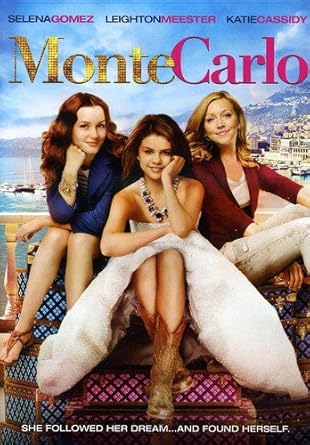
While reading Pudd’nhead Wilson, I unlocked a memory of a movie I had watched years ago but had repressed deep into my mind. Monte Carlo is a 2011 Selena Gomez movie that involves a poor tourist switching places with an ultra rich princess during a vacation in Monte Carlo (thus the title). Considering the targeted age demographic was probably 7-12 year old kids, this movie certainly lacks the nuance Twain provides. However, I find it interesting that the whole switcheroo dynamic seems to be quite common in movies over the last few decades. Each provides something that differentiates itself just enough to be considered unique (for example Freaky Friday involves switching bodies while The Parent Trap involves two identical twins switching places). Again, none of them provide any sort of larger commentary on a time period like Twain was providing in regards to race and its influence (or lack thereof) on one’s character. Yet, I find it interesting that more than a century after Pudd’nhead Wilson was published, eerily similar plots are still being churned out frequently. To me it goes to show that Twain’s switcheroo based formula was engaging enough to appeal to a variety of readers, providing him with a larger audience to deliver his message. If, 120 years later, swapping places can still be a selling point for ( admittedly low quality) movies, it must have worked in 1894.

No Country For Old Men- Thoughts

This was a very interesting novel to read. If I am being completely honest I did not really enjoy it very much and found myself somewhat confused by all the action happening throughout the book. I have personally never really been one for action filled novels but this one specifically I did not enjoy. While I did think that the author did a nice job with the writing, I just was unable to feel a connection with the book. The book has many themes that are extremely apparent throughout the book. The main one that I continuously saw being good vs evil. Another main one that I saw was violence and drugs and alcohol. I ended up finding some articles about this novel as my interest began to peak and found one explaining how perseverance is another main theme. This theme is showing that some characters in this novel preserver but none like the unnamed drug runners themselves.

No Country for Old Men

No Country for Old Men, written by Cormac McCarthy, is a quickly paced novel that is very interesting to read. Though it’s a short text, it digs deep into the complexities of the protagonist. The reader is able to look into the psychology behind the characters, mainly Sheriff Bell. I think a major reason why this short novel is so captivating and descriptive is because of its structure. At the beginning of every chapter, the author chooses to insert a monologue of Sheriff Bell. Each monologue is a recollection of Bell’s thoughts toward his job, past events, and how the happenings of his life in general influence his thoughts and actions. This is a powerful literary tool because it’s unconventional yet successful in adding to the novel. The reflections tend to expand on guilt, regret, or fear that the sheriff feels. At the beginning of chapter 7, Bell discusses his experience in war: “I was supposed to be a war hero and I lost a whole squad of men. Got decorated for it. They died and I got a medal.” Clearly, Bell feels guilty in this instance as he does in many of the other reflections in each chapter. The author’s rhetorical purpose of doing this could be to communicate Bell’s uncertainty of his actions relating to his job and life.

No Country for Old Men Controversy

“No Country for Old Men” by Cormac Mccarthy focused mainly on the war on drugs, and educated many people on an issue that is often forgotten about. This issue with drugs is something that I feel is just as prevalent today as it was in the novel, which might be controversial to some people. I feel as if drug use has only increased since the 1980s, and the number of people who die drug related deaths has continued to increase in the past few years. Although I always thought the war on drugs ended far before the 2000s, according to an article written in 2019 from the New York Times titled “Is the ‘War on Drugs’ Over? Arrest Statistics Say No”, this war is still very prevalent. History.com says that “between 2009 and 2013, some 40 states took steps to soften their drug laws, lowering penalties and shortening mandatory minimum sentences… [showing that] public support for the war on drugs has waned in recent decades.” Reading this book was a good reminder of how much farther we need to go in this “war with drugs” to allow people to live longer, happier lives and decrease the number of overdoses we see each year.

Short Blog #2

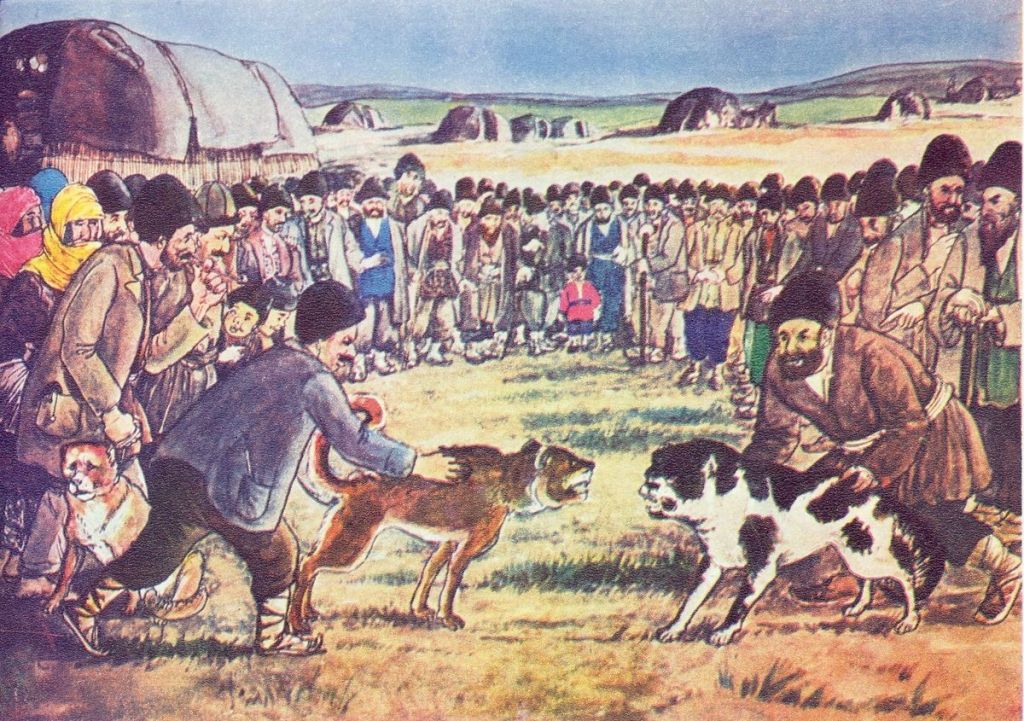
When I read White Fang a while ago I remember the section where White Fang was forced to fight other dogs and at one point a lynx was thrown in there. It really bothers me that people even to this day make innocent animals fight each other to death in an unhealthy manner. It’s sad when animals kill each other in general, but at least that’s the life cycle. The fact that animals are shoved in cages, tortured, beat, and thrown in a fenced up area to kill each other is just horrible. It makes me think about how in some countries young kids are forced to fight in wars. Our world is so messed up in so many ways I just can’t even imagine how life is different in so many other places. The thought of kids having to lose their life out of their control is just horrible. Not even kids, anyone. I wish countries didn’t have to fight each other, and the ultimate goal is money. Land equals power and power equals money. It’s terrible to hear about and I’m glad that we don’t have to experience these horrible things, but it almost makes me feel worse that I haven’t had to.

Design a site like this with WordPress.com
Get started