Lyke American Assassin Long Blog

Is American Assassin a Great American Novel? First of all a lot of things that are great aren’t considered great until their time has already passed. For example some of the world’s most famous pieces of art weren’t discovered until hundreds of years after they were created. American Assassin will not take a hundred years to become considered as great but I think that one day it will definitely be considered a Great American Novel even if it isn’t really one right now. The first criteria for a Great American Novel are first for it to be American and a Novel so it’s easy to say that American Assassin is well on its way, it even has American in its name.

Diving more in depth, I don’t think that a novel must fit all of the six criteria that we established in class. There are plenty of Great American Novel’s that don’t. All things considered though American Assassin does a pretty good job.

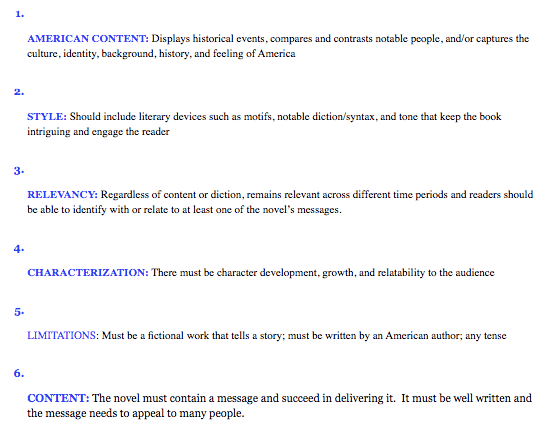
First off is American Content which basically states that the content must be at least related to America in some way. It is clear from the name and the fact that all of the major good characters are American that American Assassin fits this category. Another piece of this category is that the novel captures culture, identity, background and/or feeling of America. The feeling of America is something that is always changing. There isn’t a way to capture the full feeling of America over the course of the last four-hundred years in one novel but it is possible to capture the feeling of America a specific place and time in American history. In the twenty-first century, most of America’s major conflicts have been with the Middle East, a place far away from the U.S. A lot of people find this fact frustrating as American involvement on another continent with things that might not effect Americans have cost American lives. The concept of the U.S. versus terrorists and corrupt leaders in the Middle East was and might still be a feeling of America. One of the three major settings in American Assassin is in the Middle East. Just this fact can someday be considered as a reflection on a time that America was at war with the Middle East. This goes hand in hand with the third criteria of relevancy. Basically, is the novel relevant and and will it stay relevant. Considering that America has been heavily involved in some way with the Middle East for the better half of the last century, it is easy to see that it fits well within the relevancy category.

The second criteria is essentially that the style keeps the book interesting. Every book has a style and different people have differing opinions on style. Therefor the best way to judge a books style is to check its following and the amount of people in that following the couldn’t put the book down. Based on the fact that American Assassin was made into a huge movie, it is fair to say that people generally enjoyed the style.

Criteria four: there must be character growth and development and the audience must be able to relate to the character/s. Throughout the entirety of American Assassin Mitch Rapp is evolving and changing pieces of his character. I identified with a lot of the decisions that Rapp made. The perspective was such a close third that it was easy to connect with Rapp.

The next criteria is just ensuring that American Assassin is Actually American and that it is actually a novel, both of which can be assumed from simple observations.

The last thing that makes American Assassin is the fact that the novel includes a message and succeeds in delivering it. It can be argued that all novels have a message or purpose. The only problem is that some don’t effectively deliver their message. The overall purpose of American Assassin is to entertain and it definitely succeeds in that. I think that as far as finding a message goes, American Assassin is still fairly new. Over time, a deeper message will come out and if you dug deep enough their is definitely a multitude of different messages. However like any good novel, it needs time to develop a nostalgia and sense of American greatness to it that makes any Great American Novel.
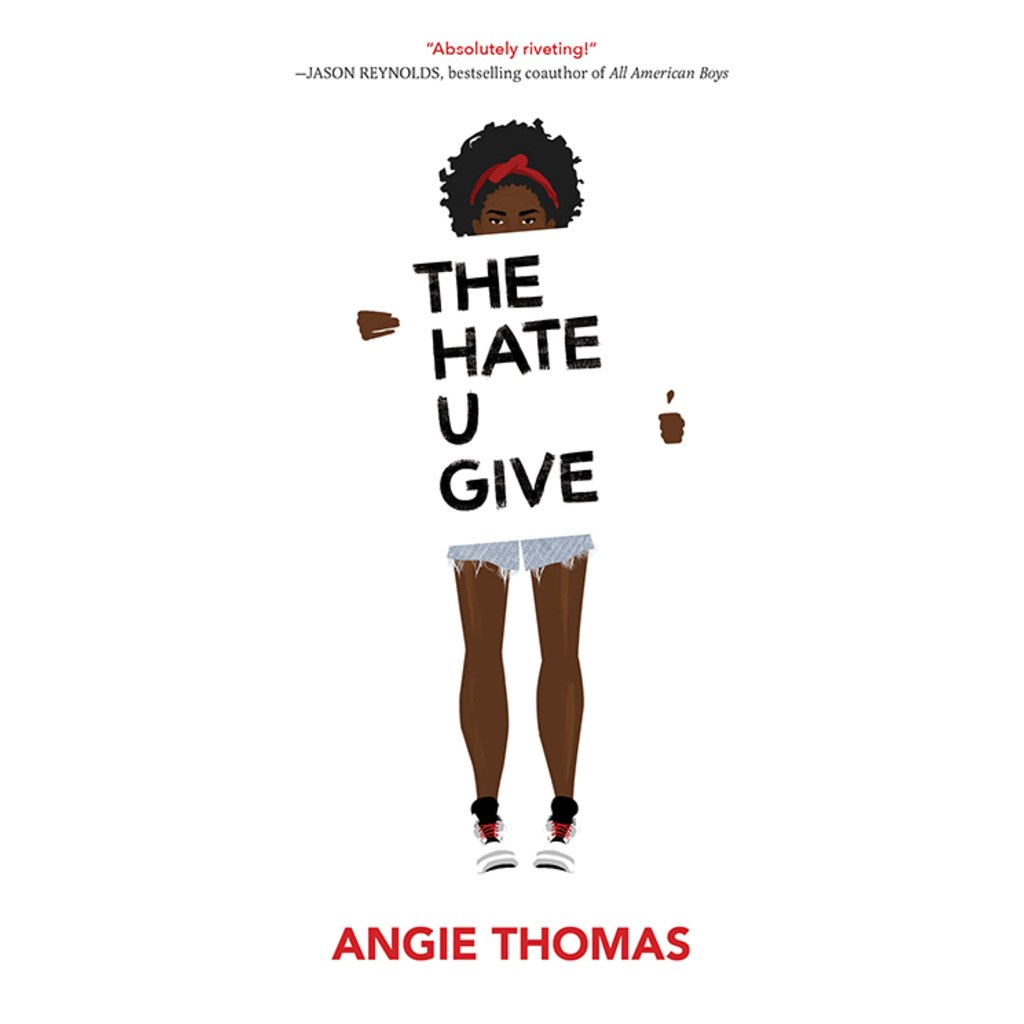
The Hate U Give: Starr Carter’s Playlist

In the novel The Hate U Give by Angie Thomas, the main character Starr Carter realizes the importance of standing up for justice after she witnesses the death of her black friend who was shot by a white police officer. In the novel, Music plays an important role in Starr’s life. I curated this playlist that represents the different themes, messages, and attitudes expressed in the novel. In this playlist, I included songs from Tupac because the author of the novel, Angie Thomas, drew inspiration from his music. Starr’s father, Maverick uses his lyrics to teach Starr about racial poverty and violence—a major theme in the novel. I also included the Fresh Prince of Bel Air theme song because there are references to the show throughout the novel. Lastly, I included some of the songs from the movie soundtrack, and other songs that expressed the overall attitude of the book.

Starr Carter’s Playlist

  • “Keep Ya Head Up” by 2Pac
  • “Shake it Off” by Taylor Swift
  • “The Fresh Prince of Bel-Air” by DJ Jazzy Jeff and The Fresh Prince
  • “Run the World (Girls)” by Beyoncé
  • “Always” by Amandla Stenberg
  • “Me Against the World” by 2Pac
  • “Waiting on the World to Change” by John Mayer
  • “Never say Never” by Justin Bieber
  • “Rise Up” by Andra Day
  • “We Won’t Move” by Arlissa
  • “Fight Song” by Rachel Platten
  • “Stronger” by Kelly Clarkson

Context of The Awakening

In 1890, the National Woman Suffrage Association and American Woman Suffrage Association combined to form the National American Woman Suffrage Association. This organization led by Susan B Anthony and Elizabeth Cady Stanton worked to give women more rights. During the time period different radical activists like Stanton, Matilda Joslyn Gage and Olympia Brown also campaigned for broader women’s rights including changed divorce laws and an end to job and pay discrimmination. Women did not get the right to vote until the 19th amendment was passed August 18, 1920. During the years previous to when The Awakening was published, only four states granted women the right to vote. This context is apparent in The Awakening as Edna moves to gain more independence.

During this time period women had a more traditional role. Women were just beginning to join the workforce and those that did had trouble finding jobs. Most high paying jobs went to men. Because women were thought to only take care of children and do housework, 60% of those that were employed were employed as domestic servants. While most women wanted to move away from the traditional role, some women thought that it was disgraceful fighting for rights. This can be seen in The Awakening as how Edna is expected to act. Often times, her husband and those around her are unpleased with how she acts because she does not undertake this role. On the other hand, Adele models the traditional women: caring for the children, having many children, and being an obedient wife.

Is “A Tree Grows in Brooklyn” a GAN?

I’m honestly not sure if it could be considered a great American novel or not. It has some aspects of a Great American Novel but I keep debating with myself if is is or isn’t. It has some of the aspects but they aren’t considerably strong aspects.

The book was written by an American author, Betty Smith. There is also character development throughout the story. The main character, Francie, goes from being innocent to having to face the harsh realities of the world when her family is hit by tragedy. It contains content from just before The Great Depression and after it. The book also has motifs and a tone that keeps you engaged throughout the book. There are things in the book that remain relevant like social status and discrimination.

It doesn’t really have significance to an important event as it skips over The Great Depression. 

Well I guess after breaking it down like that I would consider it a Great American Novel.

Edna and Icarus

In ancient Greek mythology, there is a story about a son named Icarus. Icarus’ father, a genius inventor named Daedalus, created to sets of wings made of feather, wood and wax. Daedalus warned Icarus not to fly too close to the sun, but as Icarus was flying, he became to bold. Icarus ignored the warning, his wings melted, and he plummeted to his death.

The story of Edna greatly reminds me of the story of Icarus. While the two stories do not hold the same meaning, Edna also became too bold. In the final scene of the novel, Edna got too far out into the sea and drowned. This scene begins with a: “A bird with a broken wing was beating the air above, reeling, fluttering, circling disabled down, down to the water” (300-301). This quote is what drew me to recall the story of Icarus.

Even though the two stories hold one main similarity, I believe that the author is trying to push an opposite meaning. While both the Greek myth and the story of Edna end in death, Edna’s death feels more as a liberation. Because of this, I believe the author is condoning boldness, unlike the story of Icarus.

Lyke Pudd’nhead Wilson Short Blog

In Pudd’nhead Wilson by Mark Twain both Tom and Chambers are raised in the other’s societal role. The kid that was suppose to be a slave is raised as a slave owner and the slave owner is raised as a slave. Each kid ends up filling the role they were raised into and their birth doesn’t change anything. Even though this is fiction, I can’t help but wonder what if an event like this actually happened? Could it have changed people’s perception of slavery or could the Civil War have been avoided. Genetics do play a significant part on a human’s mind and personality but what plays an even bigger role is how they were brought up and the experienced that they have had.

I also keep asking myself how Roxy actually feels about her decision in flipping the babies. Her son, “Tom”, does get to be privileged with opportunities and less suffering but it also comes at the cost of his character. “Chambers” on the other hand doesn’t have those opportunities but learns from his suffering and failures and develops what would be considered good character. The question of the morality of sacrificing character for opportunity is something that I think Twain wants the reader to reflect on and is definitely a major them in the novel.

Should Huck Finn be considered a “great American novel”?

Yes. Let’s look at the the requirements that our class has set up for a Great American Novel and find some examples from The Adventures of Huckleberry Finn.

American Content: The novel takes place in St. Petersburg, Missouri in the 1850’s. Slavery is still a major industry and it is a major aspect of this novel. It is what drives the two major characters, Huck Finn and a slave Jim, in many of the encounters they have on their journey down the Mississippi River. The many times where Huck needs to lie to authorities and other people about who he is traveling with and the dialogue between them perfectly encapsulates the identity of some people who had lived in that place and time period. Jim was a runaway slave who Huck became friends with and eventually decided to help him escape to freedom which spoke to the growing movement to end slavery.

Style: The book is written by one of the most acclaimed authors of all time, Mark Twain. He no doubt is a fantastic writer and was able to get the reader to become in engaged with the characters throughout the book like no other. The book takes place in first person from Huck’s perspective which allows the reader to see Huck grow as a person and his feelings for the other characters in the book change as the story goes on. This book kept me engaged from beginning to end and I have no doubt that many others feel the same.

Relevancy: Aside from the story of freeing a slave this story is about freedom. In the beginning of the novel Huck is going to school and being civilized. He is not a fan of this. After his father returns to town and essentially kidnaps him, Huck finds this as an opportunity to start his adventure. He journeys down the Mississippi River with Jim and they steal, lie, run with other criminals. They try to free Jim and they involve themselves with a classic family feud. Huck has no shortage of adventure in this story and in the end it is believed that he moves west instead of being adopted by a nice family as he knew that kind of life was not what he wanted or needed. This is a story that can be told over and over and though Huck didn’t use his freedom in the best ways in the beginning he found out who he wanted to be and who he was. Everyone wants freedom and everyone wants to know who they are and this story will be able to encourage those urges for years to come.

Characterization: As discussed the characters are very well developed from the eyes of Huck. But Huck is the one who has the most apparent and important changes. He first leaves his father’s to simply run and seek adventure. He found Jim and didn’t think much about it but throughout the novel he struggles with the societal belief that Jim is nothing but a slave and he has no reason to help him and whether or not he should help Jim find his own freedom. Huck eventually decides that the right thing to do is to free Jim from slavery and he stops at nothing to help his friend.

Limitations: This book fits our class’s limitations that we set on a Great American Novel. Mark Twain is American and it is a fictional story.

Content: This novel is extremely well written and its message will be stick for many years to come.

The Adventures of Huckleberry Finn is definitely a Great American Novel and I would recommend it to anyone who is old enough to understand the dialogue and themes throughout the novel.

Louis Zamperini’s Soundtrack

I decided to make a playlist for Louis Zamperini’s life. Not necessarily of the type of music that I picture him listening to, but more so the type of music that describes his life and everything he went through. The majority of the songs are about surviving, and Louis’ immense strength which amazed me as I read Laura Hillenbrand’s novel “Unbroken”. There are a few songs in there that don’t fit this criteria, but fit something else. For example, “Where Is the Love”, “Another One Bites the Dust”, and “Only the Good Die Young” are more about how many people in Louis’ life died. So many POWs died throughout this, and Louis lost so many people that he was close to and that helped him survive. “Born in the USA” I included because it reminds me of how happy the US men in POW camps were when they found out that they won the war. They were waving an American Flag around and saluting to it, and I think this song perfectly encapsulates that. Overall, making this playlist was a fun way of reminding myself of what happened throughout the novel.

The Hate U Give

In chapter eight of The Hate U Give by Angie Thomas, the main character Starr attends the funeral of her best friend Khalil. Khalil was unarmed and shot by a police officer after being pulled over. Starr was in the car with him and witnessed all of this. Since this event at the beginning of the novel, Starr has not been the same. She can barely focus at school and finds herself pushing some of the most meaningful people in her life away. Khalil’s death has caused Starr to enter a time of anxiety.

The author’s use of sentence and paragraph structure reiterates Starr’s uneasiness and lack of composure. Starr’s point of view is told in first person in the novel, so throughout the funeral the reader is really immersed in how she feels; “My legs tremble and a wave of nausea hits me” (Thomas 125). On pages 126-127, Starr’s emotions speak loudly as the physical happenings in the service are a blur in the background; “The organist starts playing, and everyone stands. ‘And Jesus said, “Do not let your hearts be troubled,”‘ he says, coming down the aisle” (126). The quick jump from one event to another and the first person descriptions of Starr’s emotions really puts the reader in Starr’s place and is successfully communicated by sentence structure.

The Hate U Give Short Blog Dominic

So far in The Hate U Give, I have really empathized with Starr, the main character and narrator. She has been dealt a tough hand, having to cope with her childhood best friend being shot by the police right in front of her. While this is something that would obviously be traumatic for anyone, it seems especially tragic for Starr, who has already witnessed a shooting before. (It was Natasha though. Her blood mixed in with the water, and all you could see was a red river flowing down the street” (29). ) The fact that this is the second death of a friend that Starr has encountered compounded with the fact that Starr is now forced to be questioned by the police over something she wanted nothing to do with makes me incredibly sad. Her uncle is a police officer, creating a sort of conflict of interest as her father has always told her not to trust the police despite her uncle being one of the people Starr trusts most. (“Uncle Carlos’s promises are guarantees, sometimes even more than my parents’” (56).) This entire dynamic makes the situation interesting and I’m curious to see how it plays out despite the all-too real tragedy that Starr has already encountered.

Design a site like this with WordPress.com
Get started