Unbroken revolves around the live of Louis Zamperini who is now well-known and admired for his heroic actions. In the beginning of Unbroken, it is easy for the reader to wonder why the Zamperini is so revered, but I still greatly admire Louis. Louis grows up a wild child: stealing whatever he can see and even running away. Even after he has reached success in later life, he steals a German flag at the Olympics: “Louis has a hankering to steal” (35). But with all of his faults, I still admire Louis. Louis has an extreme amount of tenacity and determination. In a college race, Louis’ opponents knew they were unable to beat him so they played dirty. Three men surrounded him and beat him during the race; he was bleeding, trapped and in pain, but he did not give up: “He burst through, blew past the race leader, and, with his shoe torn open, shins streaming of blood, and chest aching, won easily” (41). While Louis may not always be perfect, he has a strong character which makes him very admirable. He lives by the phrase that pushed him to run a lap in under one minute in the Olympics: “A lifetime of glory is worth a moment of pain” (33), and he shows the benefits of never giving up.
Huckleberry…
Do you approve or disapprove of the main character’s views or actions, reactions and treatment of other characters/animals/etc.?
Well yes and no. Huck fled his father because he beat him and locked Huck in the cabin that he was squatting in. Huck was practically immune to the beatings before he left but what really got him was being locked in the cabin. Huck wants to be free and to live his own life so he escaped. The way he got out of this was a little too extreme for me. He set up the cabin to look like he was kidnapped and then murdered and then he got in a canoe (that he stole) with all of the food and supplies that his father had leaving him empty handed. While he continues going down river he runs into a slave he knew, Jim, and they become traveling companions. So now we have two characters on the run from their abusive worlds which is awesome but they have been lying and stealing to make their way. Granted, Jim has no other option but I don’t think Huck should have fled the way he did. He has at least two adults in his life that could have protected him, Judge Thatcher and the Widow Douglas who both had shown signs of caring for Huck.
Huck is only 13 years old and is very rebellious so I can see why he chose this path but if I were in his situation I wouldn’t have done what he is doing.
A Tree Grows in Brooklyn
A Tree Grows in Brooklyn by Betty Smith is about an eleven year old girl named Francie and her life in Brooklyn, New York in 1912. The first paragraph of the book describes Brooklyn as “serene” which I thought was a unusual word to describe any borough of New York but especially Brooklyn. To be fair, I only really know modern day Brooklyn but it still feels weird to call it serene. Francie does go on in the first paragraph to contradict her statement on the whole “serene” thing and she says that “sober” could be a better word but it’s summer and Brooklyn is serene in summer. About a chapter later Franice goes to the library and that is when the book explained that she is reading two books a day and when she asks the librarian for suggestions, she gives her the same two everyday.
I like the book so far. I think it is really interesting to read about a time right before the Great Depression hit. It’s also interesting to see how weird some things are like the guy who is called the “neighborhood junkie” gives kids pennies for picking up garbage and cigarette butts but the girls get an extra penny if they don’t scream when he pinches their faces. He calls it a “pinching penny”. That’s just weird to me but there are different gender rules in 1912. Apparently the penny candy store is known as a “boys only” type store so when her brother goes in she has to wait outside. Now I want to know where the girls get their candy.
The Day of the Locust
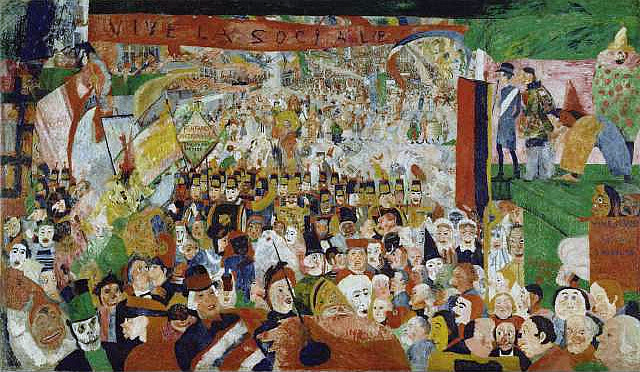
The vivid imagery present throughout The Day of the Locust by Nathaniel West makes for the text to be easily related to multiple grotesque illustrations and visual depictions.
This can be observed through pieces of art created in reality that relate to the novel, as well as a painting by one of the characters in the novel himself. Pictured above, “The Burning of Los Angeles” by Tod Hackett in The Day of the Locust illustrates the chaotic world that he finds himself in. In chapter 27, it’s stated how Tod uses the painting to cope with disruptions in his life: “After his quarrel with Faye, he had worked on it continually to escape tormenting himself, and the way to it in his mind had become almost automatic” (184). Clearly, the painting not only is a symbol of Tod’s pessimistic view on the twisted world of Hollywood, but also stems from the endless physical depictions of this theme in Tod’s everyday life. It seems that Tod regularly witnesses scenes, whether in films or in his reality, that appear theatrical because of their drama.
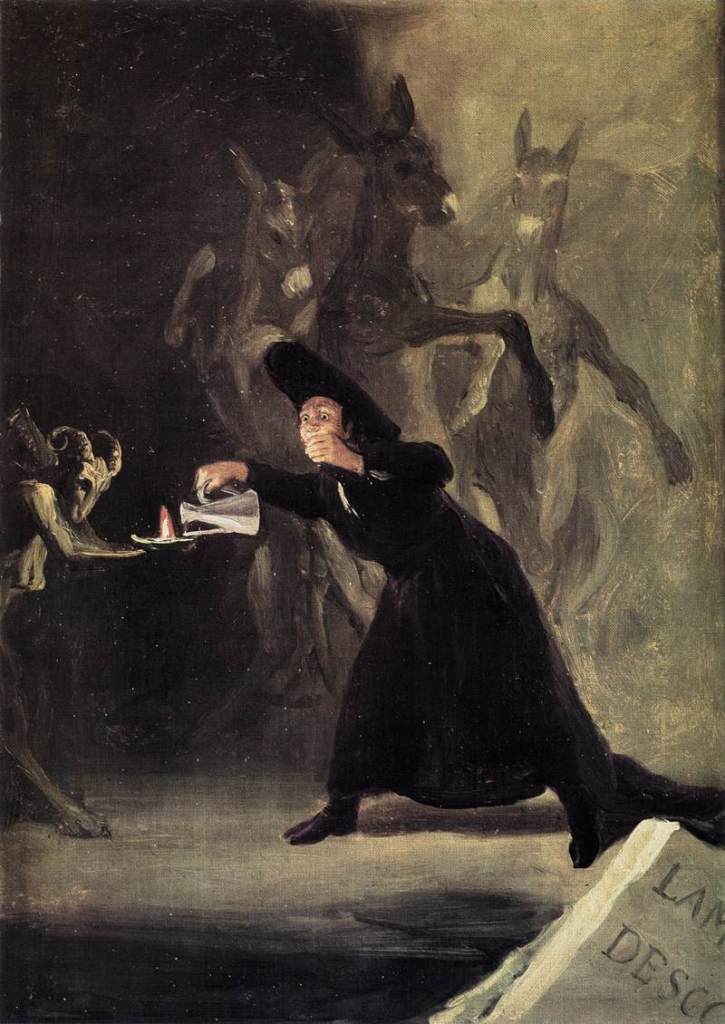
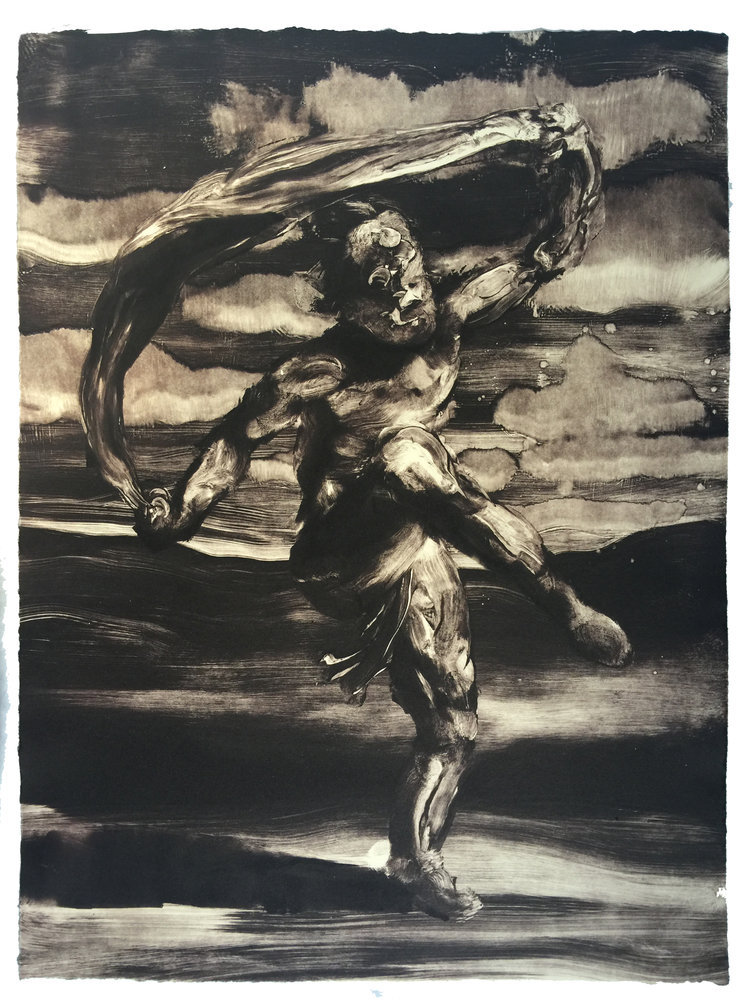
Additionally, many pieces of art in reality could perfectly fit the tone of the novel because of its grotesque nature. Many paintings from the Renaissance to modern day art depict the disarray in The Day of the Locust. This novel presents the reader with a continuous flow of bold imagery of life in Hollywood, which is open for visual interpretation in many variations of the theme of chaos and dark disharmony.
Grapes of Wrath Quote
“If you’re in trouble or hurt or need–go to the poor people. They’re the only ones that’ll help–the only ones” (479).
I believe this quote embodies one of the most important themes in Grapes of Wrath: the importance of supporting others in difficult times. When the Joads find work at the peach picking camp, Ma goes into the camp store to buy food for dinner that night and a few other groceries. As she goes to pay, the store clerk is hesitant toward Ma and overcharges her. However, once she convinces him to give her a little sugar for the coffee she buys, as she’s leaving the store she comments on the bond among the poor. The ability of the man who worked at the grocery store to give extra to those in need even though he was skeptical of the action is one of many scenarios in Grapes of Wrath depicting that people who have the least are often those who are the most generous and empathetic. For example, when the Joads arrive in their first camp, Ma shares the food she has with other kids outside of her family who are hungry. She could have chosen not to do this and save all the food for her family, but she makes a small sacrifice because she sees the pain and suffering that others endure. Many negative things happen to the Joads, such as the loss of multiple family members and often a lack of basic needs such as food. Though there are very few signs of hope in Grapes of Wrath, one of the most powerful things which allows the family to keep going is the support system present among the poor.
Short Blog #5 (Christine)
A particular quote that stuck to me that I think might be important in the novel is “Love is the enemy. Yes…the poets continually and sometimes willfully mistake love. Love is the old slaughterer. Love is not blind. Love is a cannibal with extremely acute vision. Love is insectile; it is always hungry.” because whenever I see the appearance of the car “Christine”, I always saw that sort of quote floating around her. I did notice it even more as I got farther into the book.
Short Blog #4 (Christine)
So far in the book, a lot happened. The main character, Arnie, finds this old car sitting in a front lawn of someone’s house while out driving with his best friend, Dennis. The two walk up to the front door after a bit of arguing over whether to bug the person living at the house about the car or not. The front door opens and reveals a grumpy, old veteran. He demands what the two boys wanted and Arnie asks for the car. The old veteran notices and his face turns into a look that unsettled Dennis a bit. Dennis begs his friend, Arnie to not get the car, but Arnie gets it anyways and now calls it “Christine”, as dubbed from her previous owner. Not too long after Arnie gets the car and fixes it up, he suddenly becomes less of a loser and is able to stand up to his school bullies, going as far as introducing himself to the transfer student, Leigh Cabot. They connect almost right away and Dennis sort of keeps an eye on the two new lovebirds and the car. Mostly the car though because ever since he first sat in the car back before Arnie bought it, he had really bad vibes from it. It turns out that “Christine” and the old veteran had a nasty past where Ronald LeBay’s daughter died in the car while choking on her hamburger, and his wife killed herself by running the car in the garage and inhaling carbon monoxide. Dennis learns about all this from the veteran’s brother, and becomes really worried for Arnie as he tries to reason with his friend on getting rid of the car. Leigh is also behind this as well because she felt like the car was trying to kill her by making her choke on her hamburger, like what happened to LeBay’s daughter. Arnie doesn’t believe any of this and sort of shuts out Leigh and Dennis, more focused on Christine than anyone else. It sounds like things are going to keep going downhill from here since there are now murders in the sleepy town of Libertyville, and detectives are pointing their fingers at Arnie, who defends himself and says that he was asleep at home when the first murder occurred, and out of town at a Chess Tourney when the second murder occurred.
The Day of the Locust Artwork
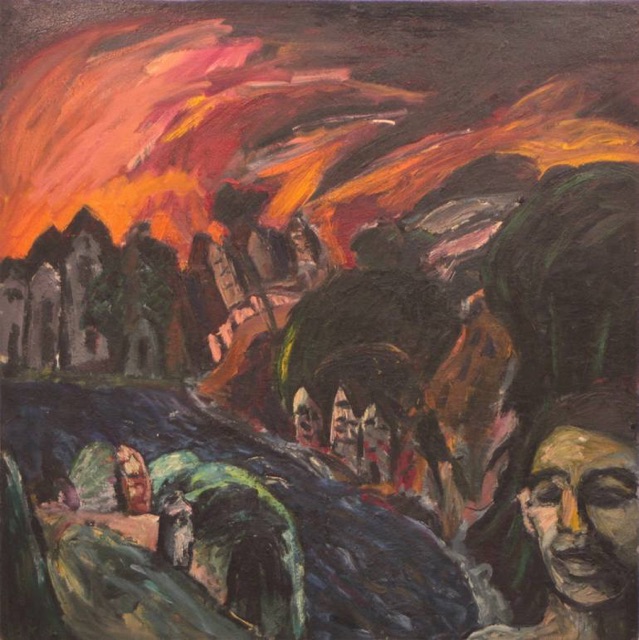
In The Day of the Locust by Nathaniel West, the author’s view of the world seems very negative and critical. This artwork represents West’s view of the world in many ways.
The author uses dark humor and a bitter tone throughout the novel, and the colors in this painting reflect this. The colors are very dark and gloomy which resembles West’s dark and obscure characters and events in the novel. Everything seems to be in the shadows, except for the city in flames in the back. This represents the two worlds (Hollywood and outside of Hollywood) that West talks about in his novel.
The face in the corner is watching over the city, similar to those in West’s book who stand around the city and stare at the masqueraders. In the novel, Tod is very fascinated by these people, and he wants to paint them. He says that he “knew very little about them except that they had come to California to die” (60).
This painting is entitled “Burning City”, and it was painted in 1965 by Richard Kreznar. In the back of this artwork, there is a city that is surrounded by what appears to be orange and red flames. This closely relates to Tod’s next artwork entitled “The Burning of Los Angeles.” This also ties in West’s idea that the city it bad and it will ultimately bring pain and suffering. This painting reflects the same mood that Tod describes in his art.
Due to the different artistic elements in this artwork, it closely resembles West’s view of the world and his novel The Day of the Locust.
Book Choice
I decided to read unbroken for the book choice and I am super excited to read it. I have seen the film but have heard so many times that the book is much better than the movie. This book is about a man who rises from the ashes and takes all his pain from a terrible experience and uses it for good. I personally love books and stories like these. It is a true and powerful story about the underdog and about strength and determination. I am excited to read this book and compare it to the film to see which I like better!
Favorite Character in Grapes of Wrath
I would have to say my favorite character was Jim Casy. From the begining of the novel, discovering his religious struggle and decisions, he became easy to relate with. He is the Christ-like figure and is very supportive. Through out the novel Casy demonstrates admirable traits when he expresses his opinions and stands up for what he believes. He died with pride standing up for something he thought was worth dying for, leaving a message. He also had a ton of wise quotes and sayings that I found really interesting and was fascinated by him throughout the novel. Who was your favorite Grapes of Wrath character?
 Great American Novels 2020